Dirty Word
Several years ago, the term ‘people/persons with disabilities’ (PWD) became the politically correct way to refer to disabled people.
Adopting it, I’d use it in social media posts.
Recently, though, I’ve decided to ditch it and draw a new line instead.
Binary Opposition
During my five years of studying all things media, binary opposition was drummed into me. Nothing can exist without its exact and equal opposite.
Dark cannot exist without light, wrong without right, blind without sight…
The binary opposite of ‘disabled’ has forever been ‘able’. Being ‘able’ has always been seen as a positive thing, while ‘disabled’ has always had negative connotations.
Being able traditionally means you are physically and mentally as humans are ‘meant’ to be.
You are whole.
You are ‘normal’.
‘Able’ was and is the line by which ‘disabled’ is drawn.
Being disabled means you are lacking, defective. Less than.
To many, the word has such negative connotations, it is denied – as illustrated by the deputy leader of the highly bigoted Reform UK political party.
Recently, broadsheet and increasingly trashy newspaper,
The Telegraph, featured Richard Tice claiming that no child is disabled, they are ‘just differently abled'.
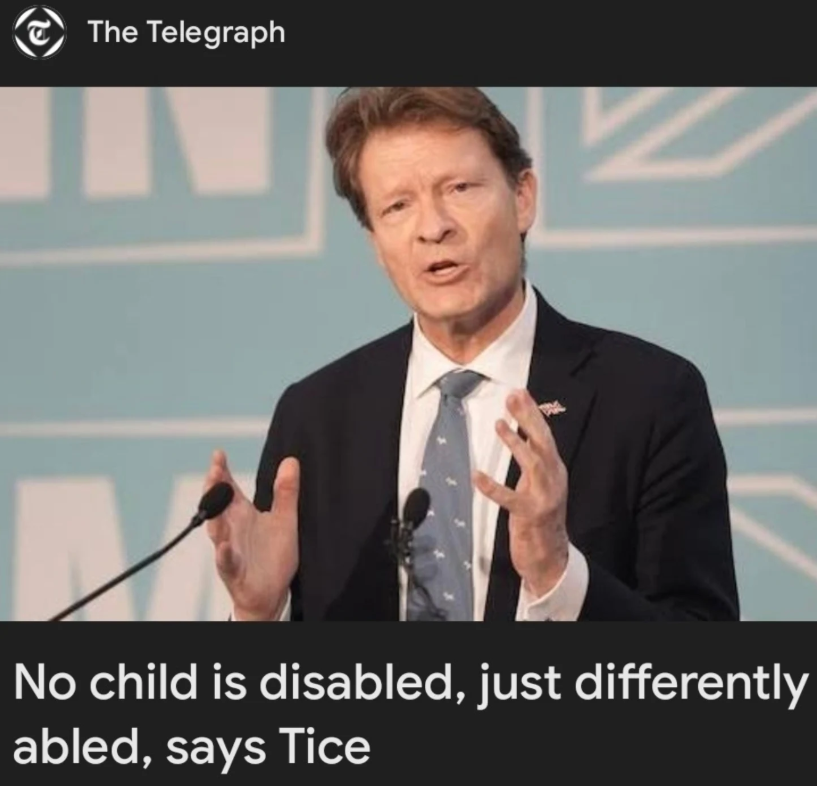
Were he not portraying 'disabled' as negative or problematic, he would not be trying to replace it with an alternative phrase.
In a recent Instagram post, I make my feelings about Tice's words very clear - as I am going to do again here.
Alongside the party's other ableist policies and claims, Tice's statement firmly places shame and negativity on the word 'disabled'.
Were he not portraying 'disabled' as negative or problematic, he would not be trying to replace it with an alternative phrase.
Given UK news media's long-running focus on PIP, Motability and SEND, with stories written to promote public outrage (and, in turn, back sweeping financial cuts), Tice may appear to be attempting to paint a positive picture of disabilities.
However, it's more likely his dismissal and attempted replacement of the word are part of Reform's plans to garner public support to change SEND policies and
slash budgets helping disabled people of all ages.
As I write in Ableism, alongside other newspapers, The Tory Telegraph consistently publishes ableist pieces, contributing to the rise in hostility towards disabled people, as seen in the increasing numbers of hate crimes reported to the police by those living with disabilities.
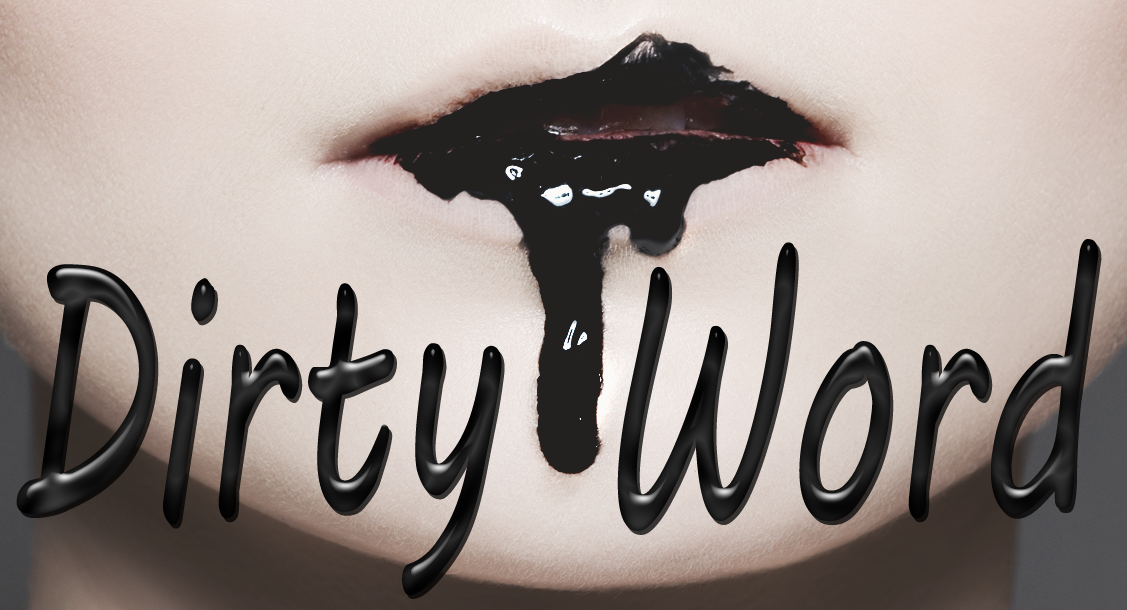
He and those who think like him - even some disabled people – are clearly imbuing the word ‘disabled’ with negativity, treating it like a dirty word that should not be used...
...Something I’m not willing to accept or facilitate any more.
Reframing
I used to avoid describing my body as disabled. As mentioned, I would use the more politically correct ‘person with disabilities’ (PWD), until I sat and thought about it.
Really thought about it and what the rejection of the word ‘disabled’ actually means.
By refusing to use it, I am agreeing with an ableist society that those two syllables contain nothing but negative connotations.
I am agreeing to ‘able’ being the benchmark by which people are judged and assigned ‘value’ – because, make no mistake, in the increasingly ableist UK, to many, being ‘able’ does increase your ‘value’ as a human being, and being disabled decreases it.
For example, during the pandemic, NICE (National Institute for Health and Care Excellence), who claim to ‘produce useful and usable guidance for the NHS and wider health and care system’ and ‘help practitioners and commissioners get the best care to patients, fast, while ensuring value for the taxpayer’, introduced what I call their ‘Let Die policy’.
Under this policy, wheelchair users unable to walk well, for example, were not to receive lifesaving intubation should they need it, in order to free up ventilators for ‘able’ bodies. Instead, they were to be purposely left to suffocate to death.
The Welsh government has stated that this policy was responsible for 70% of COVID deaths in 2020.
Seven out or every ten people who died because of COVID in 2020 were purposely left to die due to the NICE Let Die policy.
If this is not an obvious example of how disabled bodies are devalued and judged as being less worthy, less valuable as human beings, then show me something that is...
Being disabled is not only risky from a social perspective in terms of increasing abuse and ableism, but under some circumstances,
it can cost you your life.
Had that policy stated that only white people were to be intubated, there would have been public and press outrage at how racist it is – and rightly so.
Instead, we saw people protesting against wearing masks, as if wearing a mask is a complicated thing to do and an infringement on their Human Rights, while a new, unknown and devastating virus were sweeping the planet, leaving millions dead in its wake, and people with certain disabilities were purposely being left to suffocate to death as a policy of ‘health and care excellence’.
Being disabled is not only risky from a social perspective in terms of increasing abuse and ableism, but under some circumstances, it can actually cost you your life.
Seeing this ableism in action during the pandemic, seeing increasing ableism in online comments sections, news stories and in real life, I began to think about the avoidance of the word ‘disabled’.
In agreeing that ‘people/person with disabilities’ is more acceptable than ‘disabled’, am I not guilty of reinforcing and perpetuating the ableist negativities that come with the word?
In refusing to term myself a disabled, am I not enforcing the ableism I abhor and agreeing that ‘able’ equates to some sort of superiority?
I concluded the answer to these questions is a resounding yes, and decided to change that, change the benchmark, and drop the use of ‘able’ instead.
Moving Goal Posts
Instead of allowing myself and others to be identified according to an ableist idea and standard, I started using ‘undisabled’.
Some people will not understand the significance of this small linguistic change. They will not grasp that semantic standards matter and significantly shape and influence society and the mistreatment of our fellow humans.
Sometimes, sadly, people have to personally experience discrimination and social abuse in order to understand and in order to care.
As I have long said, there is not debating with dumb or discriminatory – things that studies have shown are often linked.
In the research I’ve done since 2023 for an editorial special I hope my body lets me write this year, I found studies linking bigotry (be it ableism, racism, sexism, xenophobia, homophobia or transphobia) to lower levels of intelligence.
Studies that prove discrimination is simply stupid.
As, I think, is avoiding the use of disabled simply because an ableist society has told us that ‘able’ equates to ‘better’ on many levels.
By using ‘undisabled’ instead of ‘able’, ‘disabled’ becomes the benchmark.
It is elevated from its connotations of being ‘less than’, inadequate and deficient.
By using ‘undisabled’
instead of ‘able’,
‘disabled' becomes
the benchmark.
And to put it plainly, though my body may be disabled (in no small part due to widespread ignorance about Ehlers-Danlos Syndrome within the medical profession and illegal action taken by NHS Wales where my own medical care is concerned), I confidently say - when it comes to intelligence, compassion and decency...
...A large portion of undisabled society is far more disabled
than I and many other disabled bodies will ever be.