Grief
In more severe cases, Hypermobile Ehlers-Danlos Syndrome (HEDS) is a progressive illness. This means it gets worse over time.
This progression obviously causes increasing physical problems, like worsening dislocations, subluxations and pain, as well as poorer and poorer healing.
I’ve found it also causes something else - grief.
Mystery
Aside from my birth being a little premature (something associated with babies who have Ehlers-Danlos Syndrome), the first external symptoms of HEDS showed themselves when I was very young.
When learning to walk, I fell a lot because my ankles dislocated. Toddlers will topple when taking their first steps, but the number of falls I had my first five years were abnormal. My mother saw this, sought medical attention and I ended up having useless physiotherapy from a woman visiting me in primary school, taking me into the reading corner, kneeling before me, and rotated my feet - as if doing so would make a difference. It didn’t.
My extremely hyperextensible elbows made people look away and make faces, such was their extreme bendiness.
A wound in the middle of my forehead that had needed six stitches reopened and bled when the sutures were removed.
My teeth were overcrowded around a high-arched palate, leading to four being removed so I could have braces.
After physical exercise, especially swimming (which I was good at and even did competitively), my lips turned purple because of a ‘Heart Murmur’ (Mitral Valve Prolapse).
All the above are signs of HEDS.
After an active childhood, puberty arrived and my knees starting hurting when I walked or sat with them bent. An hour of PE in high school left me unable to walk - to the point friends stood either side of me, taking my weight to help me to the next lesson, so that subject had to go.
At fourteen, hideous neck pain arrived, and throughout my teens things just got worse. I saw doctor after doctor, consultant after consultant, physiotherapist after physiotherapist, all to no avail. I was told it was ‘growing pains’, as if crippling, worsening agony are a normal part of growing.
I didn’t know the cause of my increasing physical issues,
I did know they were getting worse, spreading throughout
my young body.
At fourteen, hideous neck pain arrived, and throughout my teens things just got worse. I saw doctor after doctor, consultant after consultant, all to no avail. I was told it was ‘growing pains’, as if crippling worsening agony are a normal part of growing.
Physiotherapists tried helping, but their treatments including exercises that can actually be damaging to severely hypermobile joints (like wrapping weights around my ankles and making me lift my legs repeatedly from the knee).
Time and time again, I gave up physio because I couldn’t tolerate the pain it caused.
I had to give up activities I enjoyed because they hurt too much, miss out on things friends did because I knew they’d cause pain, even though I didn’t know why.
Though I didn’t know the cause of my increasing physical issues, I did know they were getting worse and spreading throughout my young body.
Predicting this progression would only continue, at eighteen years-old, I realised I’d have to start basing my life around my body - starting with my career.
Self-Diagnosis
A’levels didn’t suit my brain and, combined with the government raising the bar where some subjects were concerned, I failed to get the grades I needed to study law at university.
Rather than do resits, I enrolled on a two-year Media Diploma. Friends who’d done the course while I struggled with A’levels had loved it. No exams, it was 100% coursework, which worked in my favour.
I loved it, often pulling twelve-hour days, booking the editing suite until nine at night to put in extra hours. Our tutors were great. Those of us on the course bonded, becoming a tight group of friends.
Flying through it, my marks were high, and I qualified with mainly distinctions. While doing it, I started filming with a small production company, beginning with corporate videos, leading to presenting teenage magazine programmes for HTV Wales. All unpaid, it was fun and looked good on my university applications.
So good, I was offered an unconditional place for the degree I really wanted to do - Media Production with Visual Arts. The head of my year called me into his office to share the good news, saying I had a decision to make - either leave before completing the diploma, get a job and earn some cash, or stay in college and complete the course.
There was no way I was leaving my classmates and not get the qualification I’d started, so I stayed. But there was also another decision I didn’t want to make because of my increasing, undiagnosed pains:
Was I actually able to do the degree and have the career I wanted to do and have?
Studying then working in media production meant long hours lugging kit about and being on my feet. I knew my failing joints would struggle with that and the struggle was likely going to get harder.
I’d applied for another degree based on a childhood dream. Aged six, I’d started writing poetry on an old turquoise typewriter, while dreaming of being a journalist and using news to help the world improve. Instead of doing what I wanted, and knowing only its title, I ended up studying a BA Honours in Journalism, Film & Broadcasting.
In one of our first lectures, a tutor congratulated for getting into what they informed us was the UK’s first and most prestigious School of Journalism that had set the template for every other journalism degree in the country. Hearing that should have made me happy, made me feel I’d achieved something.
Instead, secretly crying in my room, I hated every minute of the course, grieving for the route I’d wanted to take and the choice my body had taken away.
Apart from one module in my second year (Language in Journalism), training us to write tabloid stories and headlines, the entire degree was academic, theory, which, as with A’levels, my brain didn’t like.
The summer before starting uni, I worked in two factories (packing CDs, then working on a production line putting components into circuit boards). The jobs only lasted a few months, but they ruined my wrists and hands, as I discovered during my first exam.
Had I received a correct diagnosis, I wouldn't have worked in those factories and my hands wouldn't have been permanently
ruined and painful.
We had to write three essays in three hours, but after finishing one, my right hand ceased-up. I couldn’t open or move my fingers, let alone continuing writing. Fortunately, the invigilator saw how badly I was suffering and it was agreed that I would be marked on one essay alone.
From then on, I sat every exam on a computer in a room with a member of staff keeping their eye on me.
Had I received a correct diagnosis in the 21 years leading up to this, I would not have worked in those factories and my hands would not have been permanently ruined and painful.
Today, using my hands hurts. I mean really hurts, and causes them to swell.
Doesn’t matter if they’re splinted or if I use powerful painkillers (known to be less effective in EDS bodies), nothing stops the pain. The only things that helps is not using my hands, which isn’t an option.
I have to feed myself, wash myself, dress myself and do something to fill my time (like making websites and photographing birds in my back garden). Otherwise, I'd go out of my mind.
Aside from getting a degree, the most positive thing to come out of university was finally getting a diagnosis, which probably wouldn’t have happened had I not had internet access in the libraries.
Where every doctor, consultant and physiotherapist had failed, I succeeded by spending hours in trawling cyberspace for answers.
Answers I found in a paper written by internationally respected EDS specialist, Professor Rodney Grahame.
Recognising the symptoms in his paper, I diagnosed myself with HEDS and wrote to him asking him to see me if I could get a referral to his London clinic. He said yes.
When I finally got to him, he examined me thoroughly, seeing things all other medical professionals had missed. Obvious things, including something called Marfanoid Habitus.
Named after (the often life-shortening and fatal) Marfan Syndrome, a relation of EDS, Marfanoid Habitus means you have abnormally long limbs on a short torso.
Professor Grahame measured my legs, arm span and torso, ran a calculation, then said I have the legs of someone nearly six feet tall (182cm), the torso of someone 5'2 (158cm) and an arm span that is 10 cm longer than I am tall. My height is 5'5 (167cm).
While measuring my wing span, he asked me to stretch my arms, then measured again. “You’ve given me another 10cm”, he said, adding my body was one of the most hypermobile he’d ever seen. Not something anyone wants to hear.
It felt good, though, to finally have a diagnosis, even if I was angry no medical professional had thought of HEDS while I, with no medical training whatsoever, had managed to correctly diagnose myself based on one paper.
If I had manged to do this, why hadn’t they?
Bubble Burst
Studying journalism made me not want to be a journalist after fully understanding the social damage news does.
We were told we were being taught to ‘manipulate the masses’ with words, which I did not want to do. Rather than head to London to go into the seedy field of news, broadcast or written, I worked for internet companies in Manchester.
This was before the online world became the beast it is now, when people laughed at you for working in the internet.
This was when the ‘dot com bubble burst’ (Google it), in no small part driven by - you’ve guessed it! - news media’s stories about how the internet would fail.
Investors lost confidence and pulled their cash. In the first company, managers met with investors, returning at one o’clock saying “As of five, we no longer have jobs.”
The business model was the same as Amazon’s. We'd be paid for advertising products retailers wanted to sell on our website and they'd organise delivery to customers.
Had investors hung on a little longer, Amazon couldn’t have existed because we would've already been doing it. With the shares we were given, all of us would have had bulging bank balances.
In the second company, I started as the Marketing Assistant, ending up running the site, which was huge and aimed at university students. It went down because its backers lost confidence in the online world too and pulled their money.
Another massive mistake on investors' behalf.
The third company gave me a job for a month, kept me for nearly a year and, after negotiating £80,000 off a £250,000 contract for the content I controlled, wanted me to set up and run a new department.
I was 26, my salary was £48,000 and accepting that offer meant a pay rise.
I loved working and living in Manchester, but turned the job down because I became pregnant and didn’t want to raise my child in a city. I birthed him there, then brought him home to Wales for a rural childhood.
Things were looking up – until HEDS reared it ugly head and changed life forever...
When he was a toddler, I started my own business, working freelance writing marketing, websites or brochures for local businesses and securing a contract with one offering multi-media services. It was a regular source of cash.
Things were looking up – until HEDS reared it ugly head and changed life forever...
Lesson Learned
Without going into detail, as this is already long enough, when I was thirty-one, my ankles - that Professor Grahame described as infantile due to them being so unstable - caused a fall that my body would never recover from.
Ignoring the voice in my head saying not to stand on a piece of wood lying over a hole, I stood on it, it wobbled, my left ankle dislocated and I fell. With one foot down in the hole, I did the splits sideways, experiencing a pain in the middle of my pelvis that took my breath away.
After spending a few minutes breathing through it, it disappeared and I carried on with the rest of my day. Forty-eight hours later, I awoke unable to breathe, sit, stand or walk without agony.
HEDS means my body cannot heal itself properly. Not only in terms of wounds reopening and scratches, stitches and cannulas leaving scars, but also regarding this pelvic injury - which wasn’t helped by a lack of EDS knowledge in consultants I saw. As I left one consultation, the so-called specialist told me flippantly “By the way, your pelvis will be healed in six months.”
He was wrong.
I fought my NHS Trust to get a referral back to London to see Professor Grahame again. In that appointment, he and Professor Pope who was also present were certain a six-week rehab programme for EDS sufferers would cure my pelvic injury.
My Welsh NHS Trust refused to fund it and, in doing so, acted illegally. This led to me spending the best part of a decade stuck in bed or a sofa and needing to use wheelchairs.
The lesson I learned?
Listen to that inner-voice.
If I had done that and not stood on that piece of wobbly wood, I wouldn’t have fallen and my pelvis wouldn’t have been injured.
Twenty years later, my pelvis stills flares-up and is completely debilitating. Controlling all aspects of my life, it dictates if and how I sit or stand, if I can wash my hair, if I can make myself a meal, if I can talk, if I can walk at all, if it hurts to breathe...
One night, after my brain went into shock from the pain and started shutting down my circulation, the pain almost killed me. I remember lying there, terrified waiting for paramedics to arrive, thinking 'So this is how pain kills people..."
All these things, big and small, are still not the biggest source of sorrow.
That accolade belongs to the fact that while I survived the worst, my second child did not.
More Mistakes
The mistake leading to the worst experience of my life has nothing to do with EDS.
In short, a Sonographer scanned my ovaries and told me that, due to cysts covering them, I would never be able to conceive again. Having already passed EDS to one child, I wasn’t planning on having another.
But she was wrong.
I did conceive.
Due to my unhealed and untreated pelvic injury, I was referred back to Manchester to see the amazing team who had got me and my son safely through my first pregnancy. That was the first EDS pregnancy they’d seen and they gave us a 50/50 chance of surviving it. Most of it was spent in hospital. I hoped they’d get me through this second one too.
But that wasn’t to be the case.
There was only one conclusion, the lead consultant saying words
I didn’t want to hear...
Opening the door to the consulting room, I expected to see one doctor.
Four were sitting waiting for me. We talked for over an hour, discussing every angle and possibility.
There was only one conclusion, the lead consultant saying words I didn’t want to hear...
“This time you and the baby will die.”
Due to HEDS, Pubis Symphysis Dysfunction had kicked in early during my first pregnancy, leaving me unable to walk and struggling to sit.
With my ongoing, untreated pelvic injury, the situation would be worse this time, with sitting being practically impossible.
It was explained to me that, as the baby grew, it would compress major blood vessels, which would end both our lives.
Had I not already been a mother with a child relying on me, I would have taken my chances, tried my hardest and died with my unborn baby if necessary.
Instead, I had to have an abortion I did not want to have.
I saw my much loved and wanted baby slip out of me into a cardboard bed pan in a toilet. Then I stood, looking at them, crying, talking to them, trying to say I was sorry, when no words I could say would ever be enough.
I looked at them, knowing it would not have been this way if my NHS Trust had agreed to fund treatment in England instead of illegally refusing to do so.
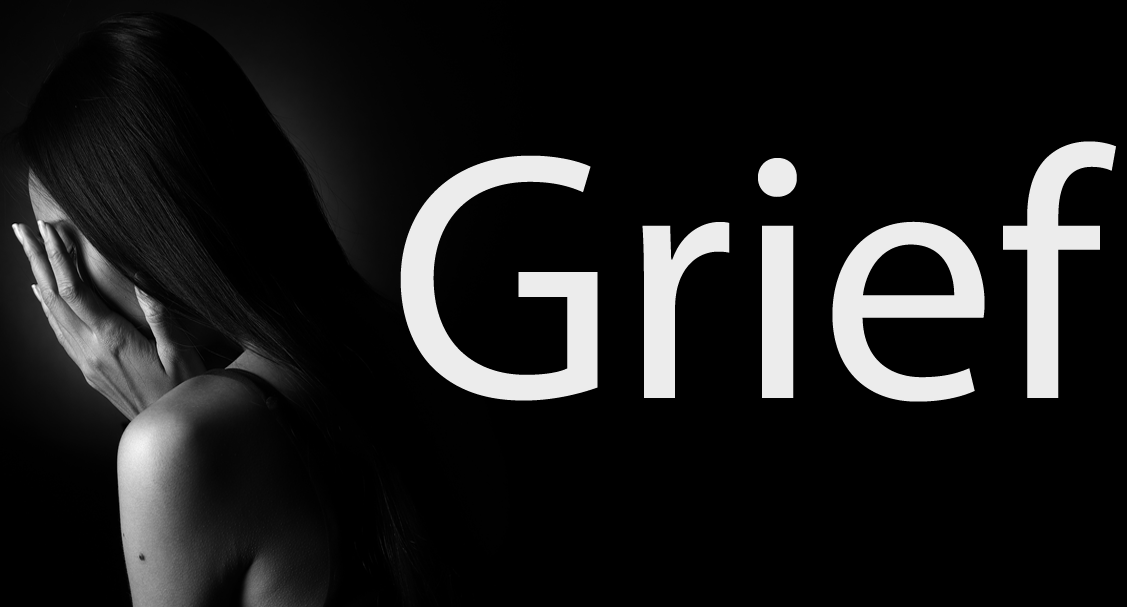
That was indescribable grief.
Grief that hits the shit out of me every year on my fall’s anniversary - April 24th.
A date that never leaves me.
Progression
On top of all this is the path my severe HEDS is taking. Knowing your illness is progressive and forever worsens is one thing. Living it is another…
Decades down the line, I’m still dealing with doctors who know next to nothing (if anything at all) about HEDS, with medics who want to run tests that are risky for Bendy bodies unable to heal well instead of choosing safe options, with staff who refuse to listen to knowledge I built on thirty years of research and learning.
I, like too many EDS sufferers, deal not only with the pain and progression of this cruel condition, still deal with medical attitudes and behaviours that not only break laws, but also the rules upon which their license to practice hangs.
I’ve been forced to memorise then quote those rules at doctors, my words laced with the implied threat that their license is at risk, to force them into doing what they should do - for myself and other EDS patients I’ve advocated for.
I've been forced to act like I'm strong when I'm terrified and close to falling apart because of bad medical attitudes.
This is, perhaps, the worst part of all because if medics put their ego aside, listened and did what they are meant to do, many of us may not be as ill as we are, may not suffer the losses we have.
Feel the ongoing grief these events lead to.
The speed with which my HEDS is progressing shocks me. Joints that were relatively stable six months ago now come out of place countless times a day.
Healing that was always bad is getting worse - as are my pain levels.
My pain never stops.
And I know, I know, it will just. Get. Worse.
I also know it didn’t have to be this way.
The disability and immobility caused by my pelvic injury led to muscle wastage. Stronger muscles help hold hypermobile joints in place.
Had I received the treatment Professors Grahame and Pope prescribed, I could have maintained some muscle strength, decreased and delayed my HEDS’s progression.
Knowing it didn’t have to be this way, that if things had been different, been how they should have been, I would still be able to work, continue my career, have cash in the bank instead of watching every penny, maybe have some saving instead of having no safety net, still be able to sit, stand, live where I want, hold the child I was forced to abort...
So many healthy people tell us living with chronic conditions to think positively, as if we don’t already do this.
So many healthy people tell us who live with chronic conditions to think positively, as if we don’t already do this. It’s patronising.
It belittles the suffering we experience.
We are allowed to have down days.
We should be free to express the negative thoughts and emotions we feel. Indeed, research shows that expressing them helps psychologically.
Remaining silent, keeping it all inside, is dangerous. It’s bad for us.
We need to be heard and seen.
Chronic, incurable, worsening conditions create a cycle.
One of good days and bad days, when symptoms are high and almost unbearable, when surviving them takes every gram of determination we possess.
Empty placations and unwanted advice do not help. They feel condescending, make us shut down, make us stop expressing things we really need to let out.
I know I’m lucky compared to many.
I can still see, still hear, still speak, still move (even though doing so hurts).
But that knowing doesn’t help on my most painful days.
It doesn’t restore what HEDS, medical mistakes and medical ignorance have taken away.
I doesn’t lessen our pain, frustration, anger...
…Or our grief.